
Designing what comes next...
When I began my master's program, I expected to learn about educational technology. While I certainly developed new technical skills and explored emerging technologies, the greatest shift in my thinking came from a different place. I discovered that the questions that excite me most are no longer about technology itself, but about how thoughtful design can improve learning for both students and teachers. I have come to believe that technology is most valuable when it supports strong pedagogy rather than driving it, and that one of the greatest responsibilities of educational leaders is to respect teachers' time by designing systems that allow them to focus on what matters most: meaningful learning.
Looking back, the projects that challenged me most were those that asked me to rethink how people learn, how schools change, and how learning experiences can be intentionally designed. My work in coaching, assessment, design thinking, and leadership has left me with more questions than answers, and I see that as one of the greatest outcomes of this program. Rather than viewing this as the end of my learning journey, I see it as the beginning of three interconnected areas I want to continue exploring: helping teachers learn and grow, rethinking assessment for meaningful learning, and leading meaningful change.
Goal 1 - Helping Teachers Learn and Grow
One of the greatest lessons I have learned as an instructional coach is that meaningful growth rarely comes from having the right answer. Instead, it comes from asking the right questions. My goal is to deepen my understanding of cognitive coaching, reflective questioning, and adult learning so I can better support teachers as they reflect on and refine their own practice.
This curiosity began through two complementary learning experiences. During CEP 800: Psychology of Learning in School and Other Settings, I explored how people construct knowledge, develop motivation, and learn in different contexts. At the same time, my year-long Eduro Learning – The Coach program introduced me to many of Elena Aguilar's ideas around transformational coaching, relationship building, and designing meaningful professional learning. Together, these experiences shifted my thinking from seeing coaching as providing solutions to seeing it as creating the conditions where teachers can reflect, grow, and develop confidence in their own practice.
Completing Cognitive Coaching Level 1 further strengthened this perspective by demonstrating the power of purposeful questioning. Looking ahead, I hope to continue this journey through Cognitive Coaching Level 2, study The Art of Coaching, continue learning through Aguilar's podcasts and writing, and engage with the professional learning research shared by Learning Forward. Ultimately, I want to better understand how coaching, adult learning, and differentiated professional learning can create meaningful growth while respecting teachers' expertise and making the best possible use of their limited time.

Cognitive Coaching
Thinking Collaborative
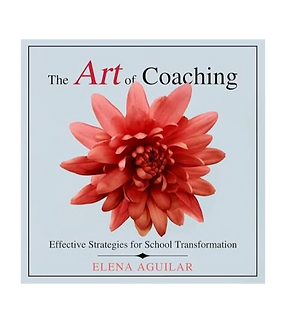
The Art of Coaching
Elena Aquilar

Professional Learning standards
Learning forward
Goal 2 - Rethinking Assessment
Throughout this program, assessment has become one of the areas I find myself thinking about most. Rather than asking how AI should be incorporated into assessment, I have become more interested in a broader question: What should meaningful assessment look like? As education continues to evolve, I want to better understand the balance between assessing foundational knowledge and assessing the thinking, creativity, collaboration, and problem solving that students need beyond the classroom.
My thinking shifted significantly during CEP 813: Electronic Assessment for Teaching and Learning. Throughout the course, we were challenged to design assessments within a variety of authentic constraints, encouraging me to move beyond traditional tests and consider how different assessment approaches could better align with learning goals. Those experiences challenged many of my assumptions and left me increasingly curious about the relationship between knowledge, creativity, and assessment.
Those questions continued to shape my thinking during my Design Thinking project, where I developed the Lesson Analyzer to help teachers examine lessons through the lenses of differentiation, learner needs, and Universal Design for Learning. Creating the tool reinforced how closely planning, assessment, and differentiation are connected while demonstrating how thoughtfully designed technology can save teachers time without compromising strong pedagogy.
One question I continue to wrestle with is how assessment should differ across disciplines. Some areas of learning rely heavily on foundational knowledge that students must retain, while others emphasize inquiry, creativity, and the application of ideas. I want to better understand how assessment can honour both while creating opportunities for authentic demonstrations of learning, greater student voice and choice, and meaningful transfer of understanding.
To continue exploring these ideas, I plan to learn from Damian Cooper's work on assessment, continue exploring Professional Learning International and its work in Concept-Based Inquiry, and follow current research on authentic assessment, proficiency-based learning, and the evolving role of AI in education by Leon Furze. Together, I hope these perspectives will help me design assessment practices that are meaningful for students while remaining purposeful, sustainable, and respectful of teachers' time.

Rebooting Assessment
Damian Cooper

Concept-Based Curriculum and Instruction
Erickson, Lanning and French

Podcast
Leon Furze
Goal 3 - Leading Meaningful Change
My final area of learning focuses on understanding how schools successfully navigate change. During my first year as an Educational Technology and Innovation Coach, I quickly realized that introducing a good idea is often the easiest part of innovation. The real challenge is creating the conditions where change is sustainable, teachers feel supported, and new practices become part of everyday learning.
My thinking in this area was shaped through CEP 815: Technology and Leadership, where I designed a year-long Professional Learning Plan focused on building coaching capacity and supporting meaningful technology integration. Having the opportunity to begin bringing that vision to life through a Teacher-Led Professional Development Day reinforced what I had learned in the course: sustainable change happens when teachers have ownership of the process. Those experiences sparked a deeper interest in implementation science, systems thinking, and change management that I hope to continue exploring.
To deepen this understanding, I plan to learn from Michael Fullan's work on educational change, John Kotter's change leadership framework, and the Carnegie Foundation's Improvement Science resources. Together, these perspectives will help me better understand how schools can create systems that reduce unnecessary complexity, respect teachers' time, and support meaningful, lasting improvement.

Educational Change
Michael Fullan

The Science of Change
John Kotter

Improvement Science resources
Carnegie Foundation
Although this master's program has come to an end, I leave with better questions than I had when I began. My future learning is no longer centred on technology itself, but on designing the conditions where meaningful learning can flourish. Whether I am coaching teachers, designing learning experiences, or leading school-wide change, I hope to continue designing systems that respect teachers' time by allowing them to focus on what matters most: meaningful learning.
I have come to realize that my passion is not simply helping schools adopt new technologies, but helping them thoughtfully integrate technology, pedagogy, and design to improve learning for both teachers and students and create schools where meaningful learning can flourish.
That is the foundation on which I hope to continue building.
.png)